Article
Silent technical risk: how outsourcing the assembly of your electrical project can violate the fundamentals of IEC 61439
When panel design and assembly are split between different companies, the chain that IEC 61439 relies on to ensure the conformity of the assembly breaks down. See the points in the standard that show this, and why integrating design, supply, and assembly reduces risk.
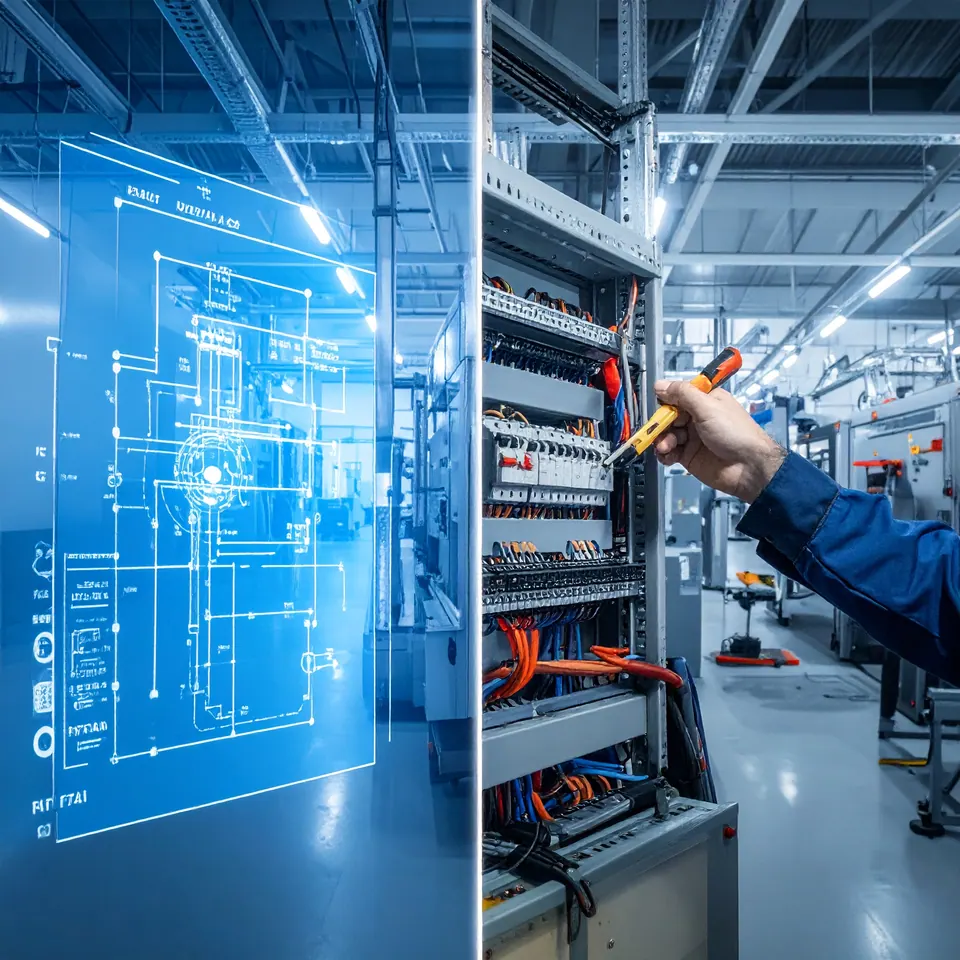
Civil engineering offers us a simple metaphor for understanding a common mistake in the electrical industry: nobody hires an engineer to design a building and then hands construction over to a contractor that has never talked (or barely talks) to that engineer. The outcome would be predictable: incompatibilities, rework, structural failures, and a building that “doesn’t match the design.”
In the electrical industry, however, many companies still insist on separating design from assembly, as if that split were neutral or merely administrative. Imagining that panel design and assembly can be treated as independent processes, as long as they are “well managed,” can be a challenge. But that is how many departments — especially Supply — think. Yet the standards that govern electrical assemblies — chiefly IEC 61439-1 and -2 (adopted in Brazil, unchanged, as ABNT NBR IEC 61439-1 and -2:2016) — state exactly the opposite. The structure of these standards rests on the premise that the finished assembly only conforms if every stage is technically integrated. When the customer separates the designer from the panel builder, the compliance chain that ensures performance, safety, electrical continuity, and traceability is broken.
This statement is not rhetoric. It is spelled out in the standards themselves. And here lies the root of the problem: companies that outsource only the assembly believe conformity lies in the design, when, in fact, it lies in the complete system, from design to execution.
 Enlarge image
Some points in IEC 61439 that show this clearly:
- Responsible party (Clause 3.10.2): if the designer is not the one who builds the panel, who is the “assembly manufacturer” under the standard? Both? Neither? Responsibility becomes blurred.
- Conformity tied to assembly (Clauses 10 and 11 of the standard): outsourced assembly without command of the design breaks exactly this link.
- Design verification (Clause 10 of the standard): any substitution due to material shortages / component swaps / changes in cable routing / wire gauges / wire markers / etc. invalidates the verification.
- Routine verification (Clause 11 of the standard): routine tests only carry normative weight when the assembly fully matches what was designed.
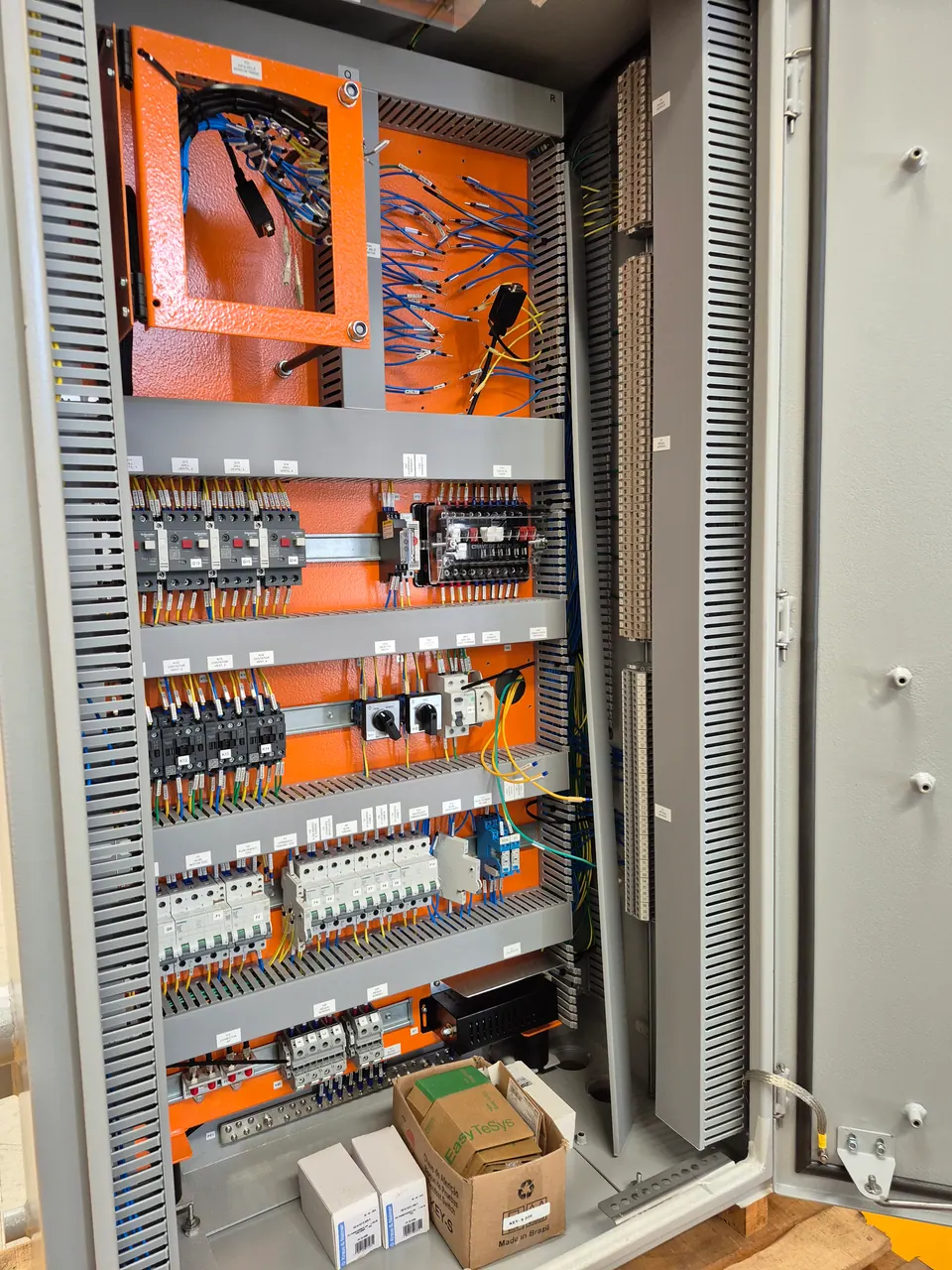
- Thermal and mechanical compatibility (Clauses 8.2, 9.2, and 10.10 of the standard): small physical changes made by panel builders without technical guidance can undo the conformity the standard requires. A component change wipes out the thermal predictions. A change to the door latch wipes out the degree of protection.
The logical conclusion is straightforward: whoever designs must master assembly; whoever assembles must master the design. Any fragmentation creates compliance uncertainty — and compliance uncertainty, in practice, turns into operational risk, delays, and rework.
And the problem grows when it comes to supply… The standard does not touch this part; it presupposes something essential: the components defined in the design must exist, be available, and be applied exactly as specified. What the market experiences (and what I have personally experienced in 16 years at Alltec) is the opposite:
- Customers struggling to forecast lead times for imported items.
- Projects that stall over a terminal block, over a sensor, over a special circuit breaker.
- Risk of nonconformity at FATs (or, worse still, at international SATs!) due to the use of off-spec items.
- Lack of control over batch, certification, and origin for export.
These obstacles are not exceptions — they are the daily reality of companies that try to outsource assembly without integrating engineering and supply.
When these elements are split among different companies, the customer ends up depending on a level of synchronization that, in practice, does not hold up.
That is why full integration — design + supply + assembly — has become the dominant model among large global manufacturers and the most demanding integrators. It reduces interfaces, eliminates gray areas, and delivers exactly what the IEC standard proposes: a single entity capable of ensuring the full conformity of the assembly.
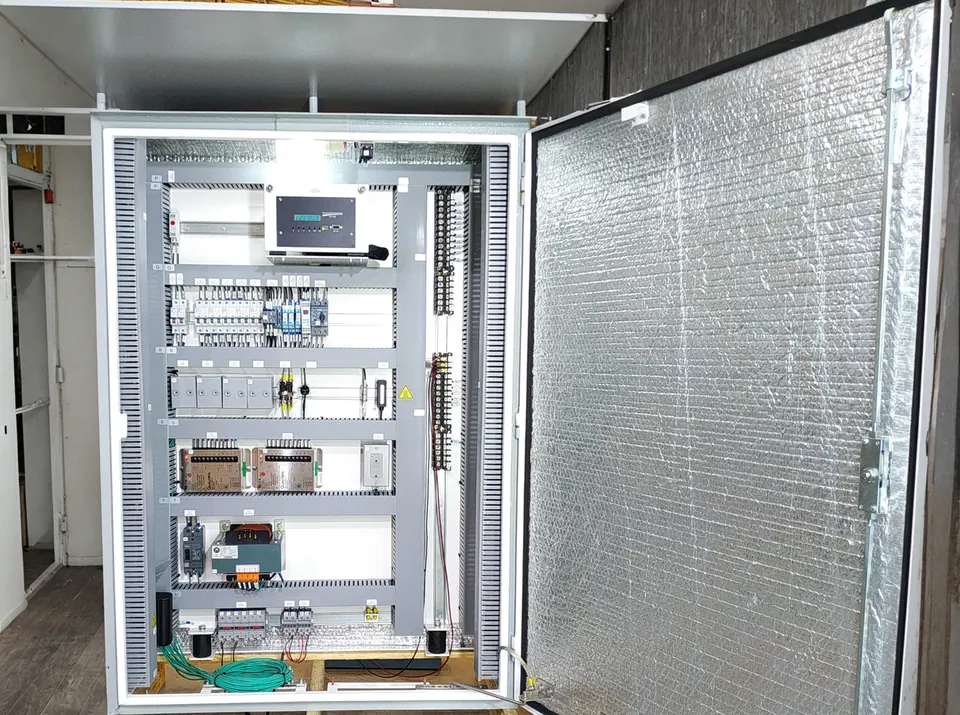
Alltec can supply the design + the tested finished product — more conformity for the end customer.
Alltec has operated on this principle since its founding. Our engineering team designs to IEC, NBR, ANSI, CSA, and UL standards; our factory builds in full conformity with the design; our import department plans ahead for lead times and keeps a technical stock of critical components, many of them imported, without requiring the customer to make an advance commitment. This ensures availability, eliminates improvisation, and preserves compliance with the standards from start to finish. Alltec delivers more than just control cabinets: it delivers consistency, traceability, and reliability to customers who need to reduce risk and maximize conformity.